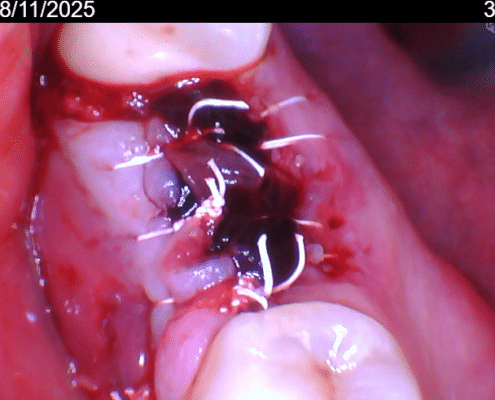
Regenerative dentistry leverages your body’s natural healing abilities to restore oral tissues. Rather than relying solely on replacement materials, these therapies stimulate the growth of new bone and soft tissue—helping you heal faster, more comfortably, and with stronger long-term results.
What Is Regenerative Dentistry?
Regenerative dentistry is a collection of treatments that harness your body’s natural healing processes. Common applications include platelet-rich fibrin (PRF), guided bone regeneration, socket preservation after extractions, and biologically driven gum therapies. These approaches focus on rebuilding what’s been lost rather than simply replacing it, giving your tissues the support they need to restore themselves.
When Regeneration Makes the Biggest Difference
- After tooth removal: Socket preservation maintains ridge shape for future implants.
- Before or with implants: Guided bone regeneration rebuilds volume for ideal implant positioning.
- Gum disease support: Biologic techniques reduce inflammation and stimulate healthier attachment.
- Slow or sensitive healers: PRF concentrates growth factors to accelerate recovery.
How Platelet-Rich Fibrin (PRF) Works
A small blood sample is drawn and centrifuged to concentrate platelets and growth factors into a gel-like membrane. This membrane is placed directly in the surgical site, where it gradually releases healing signals over the following days.
Because PRF is made from the patient’s own blood, it’s naturally biocompatible—meaning sensitivity and rejection are extremely rare. Patients who receive PRF commonly report reduced swelling, fewer complications, and a smoother overall recovery.
Guided Bone Regeneration & Socket Preservation
Guided bone regeneration uses a biocompatible graft material and a protective membrane to guide new bone growth exactly where it’s needed. Socket preservation applies a similar approach immediately after extraction, maintaining the natural ridge shape so the jaw stays strong and ready for future care.
For patients planning implants, guided bone regeneration can add the width or height needed for ideal implant positioning—creating a solid foundation that supports long-lasting results.
Benefits You Can Feel (and See)
- Faster, more comfortable healing
- Stronger foundation for future care
- Natural approach using your own biology
- Improved long-term outcomes
Who Is a Good Candidate?
- Tooth loss with plans for implants or bridges
- Bone loss following long-standing extractions
- Gum recession or periodontal disease history
- Sensitivity to long recoveries
Step by Step: What to Expect
- Personalized evaluation with digital imaging — We assess your bone density, tissue health, and treatment goals to build a clear plan.
- Comfort first — Local anesthetic and relaxation options ensure you feel at ease throughout the procedure.
- Biologic placement — PRF, grafts, or barriers are placed precisely where your body needs the most support.
- Guided recovery — Clear post-procedure instructions and check-ins keep healing on track.
- Strengthening the result — Once tissues stabilize, restorative or cosmetic refinements complete your care.
Care Tips That Protect Your Investment
- Keep routine cleanings and exams
- Brush twice daily with a soft brush
- Avoid smoking or vaping during recovery
- Eat soft, nourishing foods the first few days
- Use prescribed rinses as directed