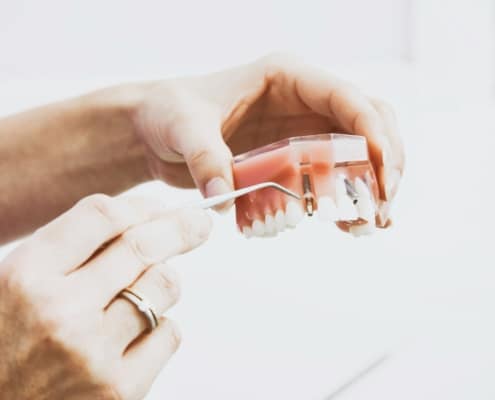
Losing a tooth—whether from decay, injury, or gum disease—affects far more than the way your smile looks. It can change the way you chew, the way you speak, and even the way you see yourself. Many people who live with a missing tooth find themselves covering their mouth when they laugh, avoiding certain foods, or feeling self-conscious in social situations. The good news is that modern dentistry offers a solution that closely replicates the look, feel, and function of a natural tooth: the dental implant.
At Elevate Smiles Dental in Tampa, we help patients understand why dental implants have become the preferred standard for replacing missing teeth—and whether they might be the right fit for your situation. In this guide, we’ll walk through what implants are, how they work, the benefits they offer over other options, and what the process actually involves from start to finish.
Understanding Dental Implants
A dental implant is an artificial tooth root—typically made from biocompatible titanium—that is surgically placed into the jawbone to serve as a stable foundation for a replacement tooth. Unlike dentures or bridges that sit on top of the gums or rely on neighboring teeth for support, implants anchor directly into bone, mimicking the structure of a natural tooth from the root up.
The key to an implant’s success is a biological process called osseointegration. After the titanium post is placed in the jaw, the surrounding bone gradually fuses with the implant surface over a period of several months. This creates a bond that is remarkably strong and durable—essentially making the implant a permanent part of your jaw.
Every dental implant consists of three components:
- The titanium post: This is the implant itself—a small, screw-shaped rod that is placed into the jawbone. It acts as the artificial root and provides the foundational support for everything above it.
- The abutment: A connector piece that attaches to the top of the titanium post once osseointegration is complete. The abutment sits at or just above the gum line and serves as the link between the implant and the visible restoration.
- The crown: The custom-made prosthetic tooth that is attached to the abutment. Crafted from high-quality ceramic or porcelain, the crown is designed to match the shape, size, and color of your natural teeth—so it blends in seamlessly.
Together, these three parts create a complete tooth replacement that looks, feels, and functions like the real thing.
Benefits of Choosing Dental Implants
There are several ways to replace a missing tooth, but dental implants stand apart for a number of important reasons. Here’s why so many dentists and patients consider them the gold standard.
Preserve Your Jawbone
When a tooth is lost, the jawbone in that area begins to deteriorate because it no longer receives the stimulation it needs from a tooth root. Over time, this bone loss can change the shape of your jaw and face. Dental implants are the only replacement option that stimulates the bone the same way a natural root does, helping to prevent resorption and preserve bone density long-term.
Maintain Your Facial Contours
Bone loss doesn’t just affect what’s inside your mouth—it affects the way your face looks. As the jawbone shrinks, the skin and muscles around it lose support, which can lead to a sunken or aged appearance. By preserving the bone, implants help maintain your natural facial structure and keep you looking like yourself.
Improve Chewing and Speech
Because implants are anchored in bone, they function like natural teeth. You can eat the foods you enjoy—including crunchy fruits, vegetables, and proteins—without worrying about slipping or discomfort. Implants also eliminate the speech issues that can come with ill-fitting dentures, so you can speak clearly and confidently.
Boost Your Confidence
A dental implant looks and feels so much like a natural tooth that most people won’t be able to tell the difference. There’s no need to remove anything at night, no adhesives to deal with, and no fear of something shifting at the wrong moment. For many patients, the confidence that comes with a stable, permanent tooth is one of the most meaningful benefits.
Surpass Dentures and Bridges
Traditional dentures rest on the gums and can slip, cause sore spots, and require adhesives. Bridges rely on grinding down healthy adjacent teeth to support the replacement. Implants avoid both of these drawbacks—they stand independently, protect surrounding teeth, and don’t require any alteration to your healthy tooth structure. With proper care, implants can last decades, often a lifetime, making them one of the most cost-effective solutions over the long run.
The Process of Getting Dental Implants
Getting a dental implant is a multi-step process that unfolds over several months. While that may sound like a long time, each phase is carefully designed to ensure the best possible outcome. Here’s what to expect.
Step 1: Initial Consultation
Your implant journey begins with a thorough evaluation. We’ll examine your mouth, review digital imaging, and assess the health of your jawbone to determine whether you’re a good candidate. We’ll also discuss your medical history, current medications, and any concerns you have.
Step 2: Treatment Planning
Based on the consultation findings, we create a personalized treatment plan. This includes deciding the optimal placement for the implant, whether any preparatory procedures (such as bone grafting) are needed, and mapping out a timeline so you know exactly what to expect at each stage.
Step 3: Implant Placement
During this outpatient procedure, the titanium post is carefully placed into the jawbone. Local anesthesia and sedation options are available to keep you comfortable throughout. Most patients are surprised by how manageable the procedure feels—many describe it as less uncomfortable than a tooth extraction.
Step 4: Osseointegration
After placement, the healing phase begins. Over the next three to six months, the jawbone gradually fuses with the titanium post through osseointegration. During this time, you may be given a temporary restoration so you’re never without a tooth. Patience during this phase is important—it’s what gives the implant its exceptional strength and stability.
Step 5: Abutment Placement
Once osseointegration is confirmed, a minor procedure is performed to attach the abutment to the implant post. The gum tissue is allowed a short time to heal around the abutment before the final step.
Step 6: Crown Attachment
The final step is placing the custom-crafted crown onto the abutment. The crown is matched to the color, shape, and size of your surrounding teeth for a seamless, natural-looking result. Once it’s in place, your new tooth is ready to use—and with proper care, it can serve you for a lifetime.
Addressing Common Concerns
It’s completely normal to have questions or hesitations about dental implants. Let’s address some of the most common concerns we hear from patients.
Cost vs. Lifetime Durability
Dental implants do require a larger upfront investment compared to dentures or bridges. However, when you consider their longevity, the picture changes significantly. Dentures typically need to be replaced or relined every five to ten years, and bridges may last seven to fifteen years before requiring replacement. A well-maintained dental implant, on the other hand, can last a lifetime—making it one of the most cost-effective options over the long term. Many dental offices, including ours, offer financing options to help make implants more accessible.
Minimal Risks With Proper Care
Like any surgical procedure, implant placement carries some risk. However, dental implants have an exceptionally high success rate—typically above 95%. The most common concerns, such as infection or implant failure, are rare and are further minimized with proper planning, a skilled dental team, and good post-operative care. Following your dentist’s instructions during healing and maintaining consistent oral hygiene are the best ways to protect your investment.
Myth: Implants Are Painful
One of the biggest misconceptions about dental implants is that the procedure is extremely painful. In reality, most patients report that the discomfort is far less than they anticipated. With modern anesthesia and sedation techniques, the placement itself is comfortable. Post-procedure soreness is typically mild and manageable with over-the-counter pain relief, and most patients return to normal activities within a day or two.
Myth: Implants Are Only for Older Adults
Tooth loss can happen at any age—from sports injuries and accidents to genetic conditions and decay. Dental implants are an option for any adult with sufficient jawbone density and good overall health. Younger patients often benefit greatly from implants because early placement helps preserve bone and prevents the shifting of surrounding teeth that can occur when a gap is left untreated.